Who am I to teach this?


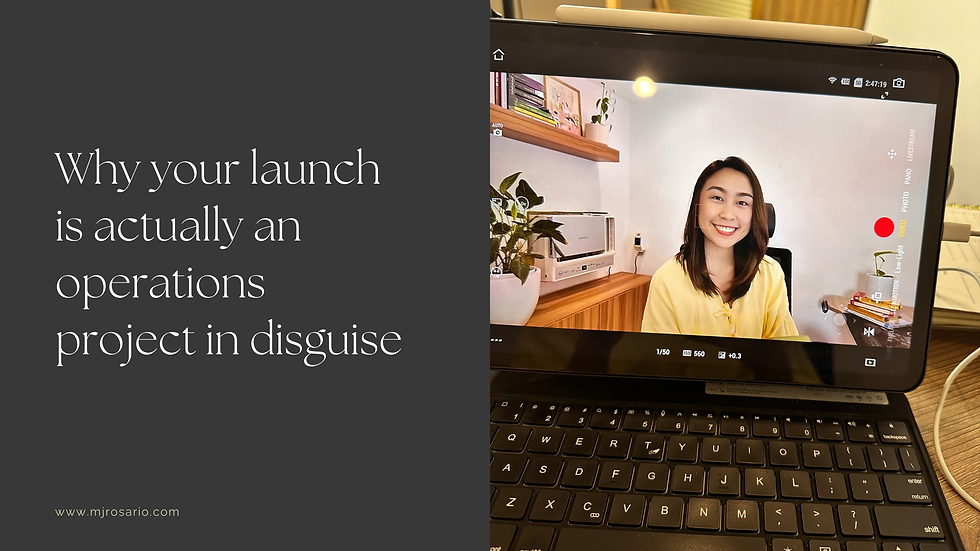
It's 11pm. The ring light is still on, the laptop is the brightest thing in the room, and the coffee you made at four has gone cold enough to count as iced.
You've just finished take six of Module 4. You watch it back, and somewhere around the two-minute mark you stop listening to what you're saying and start listening to the other voice.
It sounds a lot like you, except meaner. That voice is not saying "you got this."
I'm MJ, and I run online course launches from behind the scenes.
I'm not a coach, and I'm not going to hand you a mindset framework for this.
What I can tell you is that this exact night shows up in almost every launch I've worked on, usually somewhere between "the outline is done" and "the content is due."
So think of this less as a lesson and more as me sitting next to you at 11pm, pointing at the elephant in the room so we can both look at it.
Take what helps, and leave the rest on the desk next to the cold coffee.
What Does That Voice Actually Say?
If you've been there, you probably know the script by heart.
It tends to run in the same order every time, which feels a little rude.
First comes "Who am I to teach this?"
This one is sneaky, because it usually shows up for people who are very qualified.
Therapists with years of practice. Licensed professionals who have walked hundreds of clients through this exact thing.
The credential doesn't seem to help. If anything, knowing how much there is to know makes the gap feel bigger.
Then comes "Someone else already made this course."
You've probably seen it. Maybe you even bought it.
It has a nicer thumbnail than yours and a launch that looked effortless from the outside.
And finally there's the one that keeps you recording take seven: "What if nobody finishes it?"
This isn't the fear that nobody buys.
It's the fear that people do sign up, trust you, and then drift off somewhere around Module 2, and you take it personally.
None of these are silly questions, and I'm not going to tell you to ignore them.
I don't think they're lying, exactly. I just think they're answering the wrong question.
What I See From Behind the Scenes of an Online Course Launch
When I'm running the back end of an online course launch, I see the parts most people never do: the half-finished slide decks, the module that got re-recorded, the message that starts with "okay, honest question."
I have never once looked at a client's content and thought, "Who are they to teach this?"
Most of the time I'm thinking about whether the email sequence is going out on time.
That isn't me brushing the doubt off. It's that the doubt lives almost entirely inside the person making the course.
From the outside, what people notice is whether you're clear, whether you sound like you know the road, and whether you seem to care if they get where they're going.
The six takes are invisible. Nobody watching Module 4 knows there were five versions they didn't get.
I'll be upfront about my bias here. I'm a behind-the-scenes person.
I like plans, backups, and knowing what happens if the video file corrupts the night before launch.
So I'm not the right person to tell you how to feel about being on camera.
I can only tell you what it looks like from the chair next to yours.
Who Is Your Online Course Actually For?
If I could slide one thought across the desk to you, it would be this one.
The person waiting for your course doesn't need the world's top expert.
Honestly, the world's top expert is often too far down the road to remember what the first mile felt like.
They skip steps, use words nobody has defined yet, and forget which part was confusing.
Your future student or client needs someone a few steps ahead of them.
Someone who explains things clearly, notices where people get stuck, and cares whether they actually get it.
That's a different job from being the best.
For a lot of the therapists and licensed professionals I've worked with, it's a job they already do every day with clients.
The course is just a new room to do it in.
That doesn't make the three questions disappear, but it does change their answers.
"Who am I to teach this?" gets a quieter reply: someone a few steps ahead who's willing to turn around.
"Someone already made this course" matters less once you remember they didn't make your version, for your people, in your voice.
And "What if nobody finishes it?" is a real thing to plan for, not a verdict on you.
It's fixable with structure, which might be the most boring and comforting sentence I know.
That's how I see it from where I sit, anyway. You know your people better than I do.

Close the Laptop for Now
So here's what I'd say if I were actually sitting next to you tonight. Close the laptop for now.
Take six is probably fine, and if it isn't, it can wait until you've slept and eaten something that isn't cold coffee.
Stopping for the night isn't quitting. It's just stopping for the night.
The doubt might come back.
It usually does, right around launch week, wearing a different outfit.
You don't have to win the argument with it.
You only have to notice when it's talking, and remember that the person waiting for your course isn't asking you to be the best.
They're asking you to show up and explain it like you care.
Somewhere out there, someone is going to be really glad you didn't quit tonight. ❤